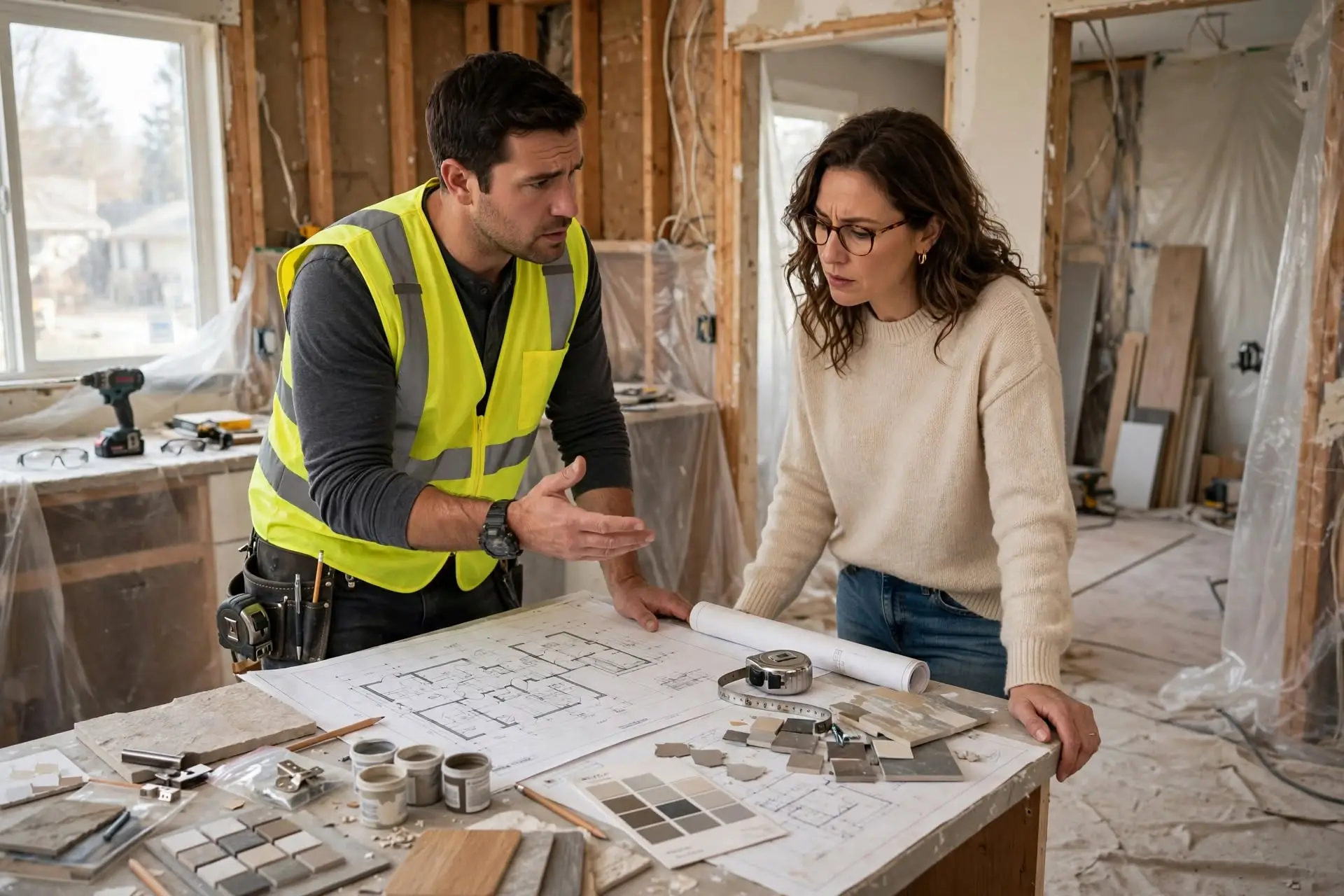
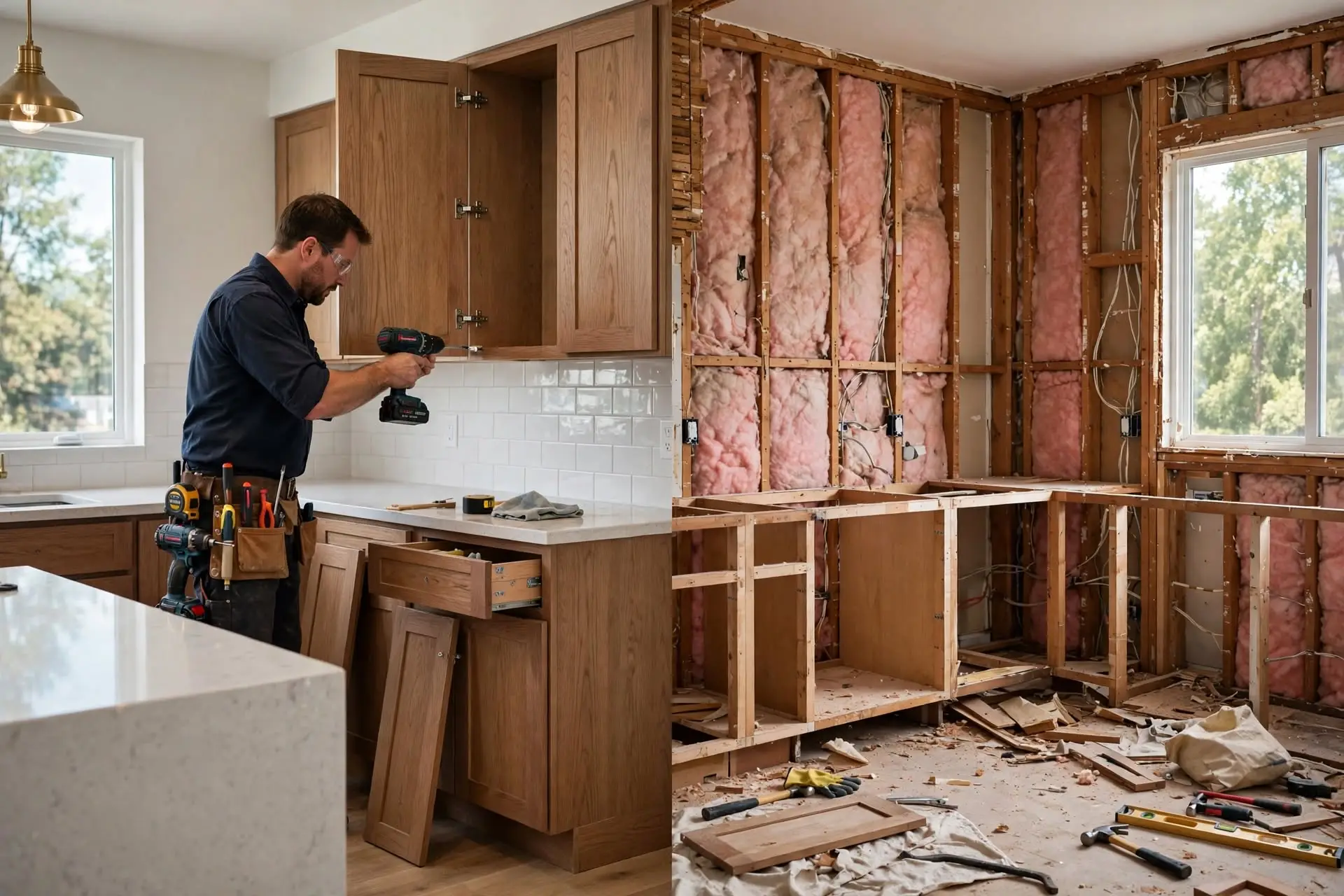
Kitchen cabinets are the single most expensive item in most kitchen remodels, and they are also the item where homeowners have the most freedom to choose between replacement and refacing. Refacing means keeping the existing cabinet boxes and updating just the doors, drawer fronts, and visible surfaces. Replacement means tearing out the old cabinets entirely and installing new ones. The right choice depends on the condition of your existing cabinets, the layout you want, and the budget you have to work with.
What Refacing Actually Involves
Refacing sounds simple until you see it done, at which point most homeowners realize it is a bigger project than they thought.
The Basic Process
The refacing crew removes the existing doors, drawer fronts, and hardware. New veneer or laminate gets applied to the visible face of the cabinet boxes, and new doors and drawer fronts get installed. The result looks like new cabinets from the outside while keeping the original boxes inside.
What Stays & What Goes
The cabinet boxes stay in place. The doors, drawer fronts, and often the drawer boxes get replaced with new ones. The countertop can stay or be replaced depending on the project scope. Cabinet hardware always gets replaced because the new doors have different mounting patterns.
The Timeline
A typical refacing project takes 5 to 10 days from start to finish. That is far shorter than a full replacement, which takes 3 to 6 weeks from demo through final trim work.
What Replacement Actually Involves
Full replacement is the more common option in Hampton Roads because most kitchen remodels also change the layout or add features that require new cabinets.
The Basic Process
The old cabinets get torn out entirely. Walls get patched where needed, plumbing and electrical get updated to the new layout, and new cabinets get installed from scratch. New countertops, backsplash, and often new flooring get installed after the cabinets go in.
The Layout Freedom
Replacement lets you change everything. You can add an island, remove upper cabinets, change ceiling height storage, or redesign the whole kitchen. Refacing locks you into the existing layout because the boxes stay in place.
The Timeline
Full replacement runs 3 to 6 weeks depending on the size of the kitchen and the design details of the project.
Cost Comparison That Actually Matters
Cost is the first thing most homeowners look at, but the picture is more nuanced than it first appears.
Refacing Costs
A refacing project in Hampton Roads for a typical kitchen runs 6,000 to 15,000 dollars depending on the material, the size of the kitchen, and the number of doors and drawers. High end wood refacing can push toward the upper end of that range, while laminate refacing sits at the lower end.
Replacement Costs
Full cabinet replacement runs 12,000 to 35,000 dollars for a typical kitchen using semi custom cabinets. Custom cabinets push the number to 25,000 to 60,000 dollars or more. These numbers cover cabinets only and do not include countertops, backsplash, or appliances.
The True Comparison
Refacing typically costs 40 to 60 percent of full replacement for the same kitchen. That is a real savings, but only if refacing actually gives you what you want. Choosing refacing to save money and then hating the result costs far more than replacement would have.
When Refacing Makes Sense
Refacing works well in specific situations and poorly in others. Knowing the difference helps avoid an expensive mistake.
Your Cabinet Boxes Are in Good Condition
Refacing only works if the underlying cabinet boxes are solid. Warped boxes, water damaged bottoms, or broken drawer glides need replacement, not a cosmetic update. A quick inspection of the boxes tells you if refacing is even an option.
Your Layout Works for You
If the current kitchen layout works well for how you cook and entertain, refacing lets you refresh the look without rebuilding the whole room. This is common in kitchens that were designed well 15 or 20 years ago and just need updated finishes.
You Want a Fast Project
Refacing takes days instead of weeks. If you need the kitchen back quickly, or if you cannot afford to be without a kitchen for a month, refacing wins on schedule alone.
Your Budget Is Tight
For homeowners who want an updated kitchen but do not have replacement money to spend, refacing delivers a real result at a fraction of the cost.
When Replacement Makes Sense
Some situations rule out refacing entirely, and forcing the issue leads to bad outcomes.
You Want a Different Layout
Any layout change requires new cabinets. Adding an island, moving the refrigerator, extending the run of cabinets, or opening the kitchen to another room all need replacement, not refacing.
The Cabinet Boxes Are Failing
Water damage under the sink, warped shelves, broken hinges everywhere, and doors that no longer close properly all point to cabinet boxes that have reached the end of their useful life. Refacing damaged boxes is throwing good money after bad.
You Want Modern Storage Features
Soft close drawers, pull out pantry systems, corner cabinet solutions, and full extension drawer glides all need cabinet boxes designed for them. Older boxes cannot always accept these features, and if you want the storage upgrade, replacement is the answer.
You Are Doing a Full Kitchen Remodel Anyway
If the project already involves new counters, new flooring, new appliances, and new lighting, adding new cabinets is often only a small percentage cost increase. In that case, replacement usually makes more sense than refacing.
Resale Considerations
The choice between refacing and replacement also affects what happens when the house sells.
How Buyers See Refaced Cabinets
Buyers do not care how the cabinets got updated. They care about how the kitchen looks and works. A well done refacing project reads exactly the same to a buyer as new cabinets in the same style, which means the resale return on refacing is very similar to the return on replacement for the visible finish alone.
When Replacement Wins on Resale
Buyers do notice layout, storage, and features. If replacement brings modern storage, better layout, or more counter space, the resale return climbs above what refacing alone would deliver. For homeowners planning to sell within a few years, this matters.
Making the Decision
The choice comes down to three factors. First, check if your cabinet boxes are in good condition and free of water damage or warping. Second, decide if your current layout actually works for the way you use the kitchen. Third, figure out if you are looking to save money without changing the fundamental design of the room. If the answer to all three is yes, refacing is a strong option. If any answer is no, replacement is probably the right call. The worst outcome is picking refacing to save money and then living with a kitchen that still does not do what you needed it to do.