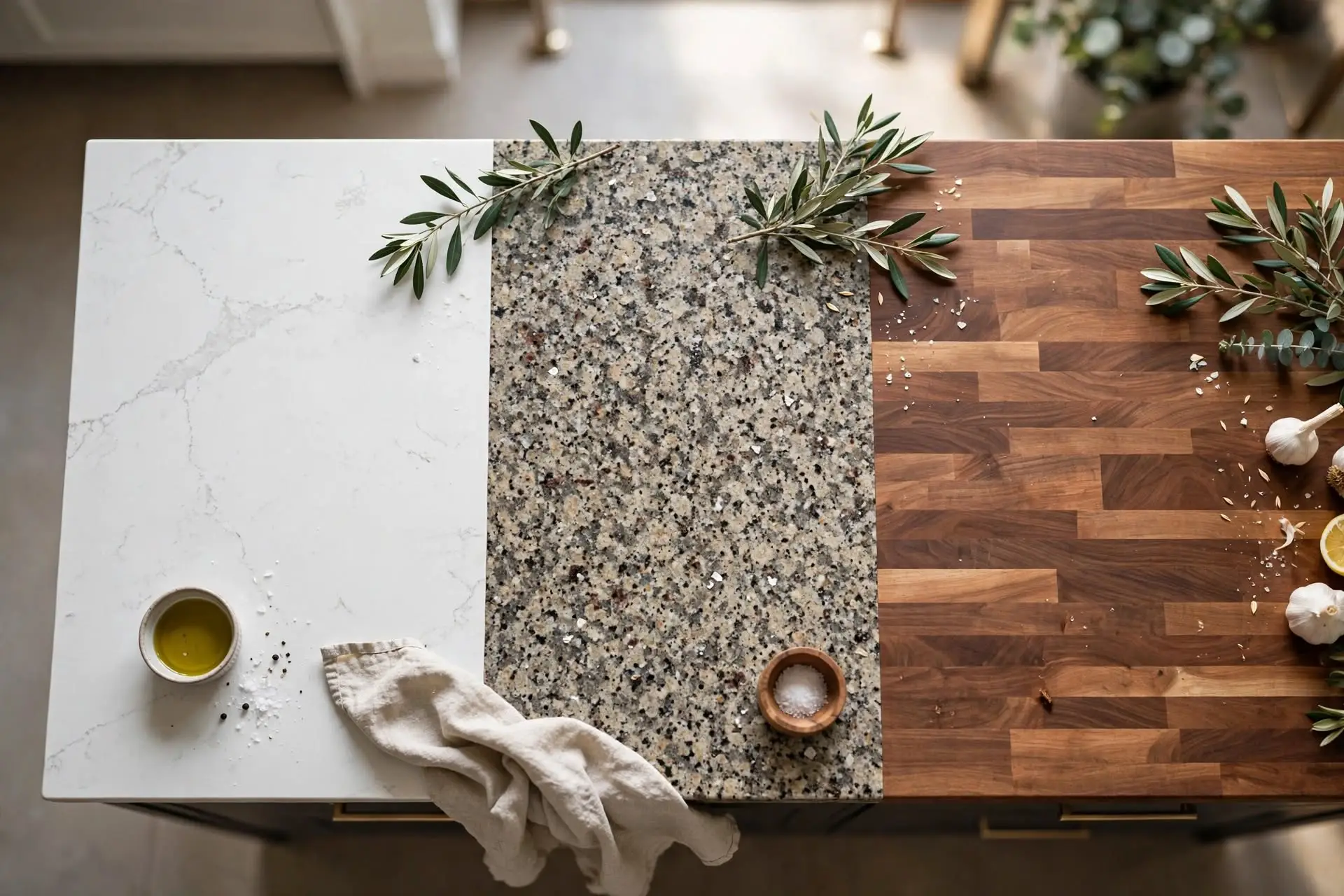
Choosing a countertop is one of those kitchen decisions that homeowners agonize over for weeks, and for good reason. The counter is the workhorse surface of the kitchen. You prep food on it, spill on it, set hot pans near it, and look at it every time you walk into the room. The three most popular options in Hampton Roads kitchens are quartz, granite, and butcher block, and each one has strengths that fit some kitchens and drawbacks that rule it out of others. Here is the honest comparison that helps you pick the right one for how you actually cook and live.
Quartz Countertops
Quartz has taken over the mid range and upper mid range kitchen market in the last decade for reasons that become obvious once you know what it actually is.
What Quartz Actually Is
Quartz counters are engineered from ground natural quartz crystals mixed with resin and pigment. The result is a slab that looks like natural stone but is made in controlled factory conditions. The color, pattern, and consistency are predictable from slab to slab, which makes design planning easier.
The Advantages
Quartz is nonporous, which means it does not absorb spills, does not stain, and never needs sealing. The surface handles daily kitchen use without complaint. Wine, coffee, tomato sauce, and cooking oil all wipe up without leaving a mark. Color options range from solid neutrals to patterns that look like marble or granite, so almost any kitchen style can find a good match.
The Drawbacks
Quartz cannot take direct heat. Setting a hot pan straight from the stove onto a quartz counter can discolor or damage the resin binder. Always use a trivet or hot pad. Quartz is also heavier than granite in some cases, which can matter for cabinet loading. Direct sunlight over years can yellow some quartz products, so kitchens with strong south facing windows should check the manufacturer specifications.
The Cost Range
Installed quartz counters in Hampton Roads run 60 to 120 dollars per square foot depending on the brand and pattern. A typical kitchen with 40 to 60 square feet of counter runs 2,400 to 7,200 dollars for quartz.
Granite Countertops
Granite ruled the kitchen market for two decades before quartz caught up, and it still has a strong following among homeowners who want natural stone.
What Granite Actually Is
Granite is natural stone cut from quarries around the world and finished into slabs. Every slab is different because the mineral patterns form over millions of years of geological pressure. That variation is either the biggest selling point or the biggest frustration depending on your taste.
The Advantages
Granite is heat resistant. Setting a hot pan directly on granite will not damage it. Every slab is one of a kind, which appeals to homeowners who want something no one else has. Granite is also very hard, so it resists scratching from knives and daily kitchen tools.
The Drawbacks
Granite is porous and needs sealing every one to two years. Skipping the sealer lets liquids soak into the stone and cause permanent stains. Some granite colors are more porous than others, so darker granites often need more frequent sealing than lighter ones. The natural variation also means you have to see the actual slab before it gets cut, because photos in the showroom rarely match what arrives at your house.
The Cost Range
Installed granite runs 45 to 100 dollars per square foot depending on the color and rarity. Exotic granites push into higher price ranges. Standard granites in common colors are actually cheaper than quartz in many cases, which makes granite attractive for budget conscious kitchens.
Butcher Block Countertops
Butcher block sits at the opposite end of the kitchen counter spectrum. It is warm, natural, and requires more care than stone products.
What Butcher Block Actually Is
Butcher block is solid wood, usually maple, walnut, cherry, or teak, laminated into thick slabs and finished with either mineral oil or a polyurethane sealer. The wood shows all the character that natural material brings, and it develops a patina over years of use.
The Advantages
Butcher block is warm to the touch and warm to look at. It adds character to kitchens that would otherwise feel cold with all stone surfaces. It is also the friendliest surface for actually cutting food on directly, since knives dull far less quickly on wood than on stone. Repairs are possible with sanding and refinishing, which no stone counter allows.
The Drawbacks
Wood needs regular oiling to keep from drying out and cracking. Water damage is a real risk around the sink and dishwasher, so many kitchens use butcher block on the island only and use stone around the wet areas. Butcher block scratches, dents, and darkens over time, which some homeowners love and others hate. In Hampton Roads humidity, wood counters can expand and contract more than they would in drier climates.
The Cost Range
Butcher block runs 30 to 80 dollars per square foot installed, depending on the wood species and thickness. Maple and walnut sit in the middle of that range. Teak and end grain butcher block push toward the top end of the pricing.
Head to Head Comparison
Each material wins in different categories, so the right choice depends on what you value most.
For Durability
Quartz wins for daily durability against stains, spills, and general kitchen use. Granite wins for heat resistance. Butcher block wins for repairability but loses everywhere else.
For Maintenance
Quartz wins with no sealing or oiling required. Granite needs sealing every one to two years. Butcher block needs oiling every few months.
For Look
This one is personal. Quartz gives a consistent modern look. Granite gives natural variation with a traditional feel. Butcher block gives warmth and character that stone cannot match.
For Cost
Butcher block and standard granite are the cheapest options. Quartz sits in the middle. Exotic granite and premium quartz sit at the top end of the pricing range.
Making the Choice
The right counter matches how you cook and how you take care of a kitchen. Serious cooks who use hot pans constantly should look hard at granite. Homeowners who want a modern kitchen with minimum maintenance should pick quartz. Anyone who wants warmth and does not mind occasional oiling should consider butcher block for at least part of the counter run. Mixed material counters are also common now, with butcher block on the island and stone around the sink and stove. Picking two materials for two different jobs in the same kitchen is often the smartest answer.